
Inside the East Baton Rouge Parish Most Wanted Program
Most wanted is a communications label, not a legal category. In East Baton Rouge Parish, a case earns the tag when an agency decides to publicize a person, and that choice can shift even when the underlying warrant stays the same. There is no single parish roster naming every wanted individual. What exists instead is a tip program run by Capital Region Crime Stoppers paired with the sheriff's warrant service, which carries out the court's orders. The two do different jobs. One collects information from the public. The other makes arrests under a judge's warrant, which is the only paper that carries legal force here.
Who Runs East Baton Rouge Parish Most Wanted Programs
Three offices divide the work. The EBRSO Warrant Division describes its mission as seeking out and arresting people named on court warrants, and it processes roughly 2,000 warrants each month; that is the agency to call with information about someone wanted on an East Baton Rouge Parish case. Capital Region Crime Stoppers handles the tip side, with a curated wanted-suspect program built for anonymous reports, and the City of Baton Rouge links to it from its prevention pages as the official public tip route. The Baton Rouge City Constable adds a third piece for city matters. Its Warrant Task Force executes criminal and civil warrants out of Baton Rouge City Court, and a joint effort with the Sheriff's Office has run monthly felony sweeps.
How East Baton Rouge Parish Most Wanted Lists Work
A most wanted list is a subset, never a full index. Someone shows up because an agency chose to feature the case, while another person with an open warrant may never appear at all. Entries go on and come off by hand, so the list also runs behind the case file it describes. For a reader in East Baton Rouge Parish, that means two things. A listed name is a lead that still needs confirmation with the court, and a missing name proves nothing about whether an outstanding warrant exists. No single parish list would settle the question either way, so the issuing court remains the only reliable answer.
Capital Region Crime Stoppers and East Baton Rouge Parish
The program covers a nine-parish region that includes East Baton Rouge. Tips arrive through (225) 344-STOP, which is (225) 344-7867, plus the P3 Tips website and the P3 Tips app. Rewards can reach $5,000 for information leading to an arrest or a felony indictment, and the phrase "No Names, No ID, and No Court" describes how the program treats a caller. Those features belong to the tip channel, though, not the legal process. A tip does not create a warrant. A reward does not close a case. The warrant itself still comes from a judge, and only the court can move it.
Sending a Most Wanted Tip Safely
A tip works best when it hands East Baton Rouge Parish officers something they can act on, and it stays safe when the caller keeps out of the situation. A wanted listing never invites a reader to intervene. Report what you know, then step back.
Key Point: The Sheriff's Office says plainly that a person who knows where someone wanted on a criminal charge is located should call the office and should not attempt an apprehension. Report, then step back.
- Note the name, the court, and the case number from the official listing.
- Describe what you actually observed, with a time and a place.
- Add a vehicle or workplace detail only if you saw it yourself.
- Send it by the tip line, the P3 route, or a direct call to the Warrant Division.
- Keep the reference number the program gives you, and do not follow the person.
What a Wanted Card Shows, and What Stays Private
The Crime Stoppers wanted-suspect program builds each card to identify a person fast. Its interface carries fields for the offense, the requesting agency, gender, race, date of birth, height, weight, hair color, and eye color, all choices that reflect the program's design across East Baton Rouge Parish.
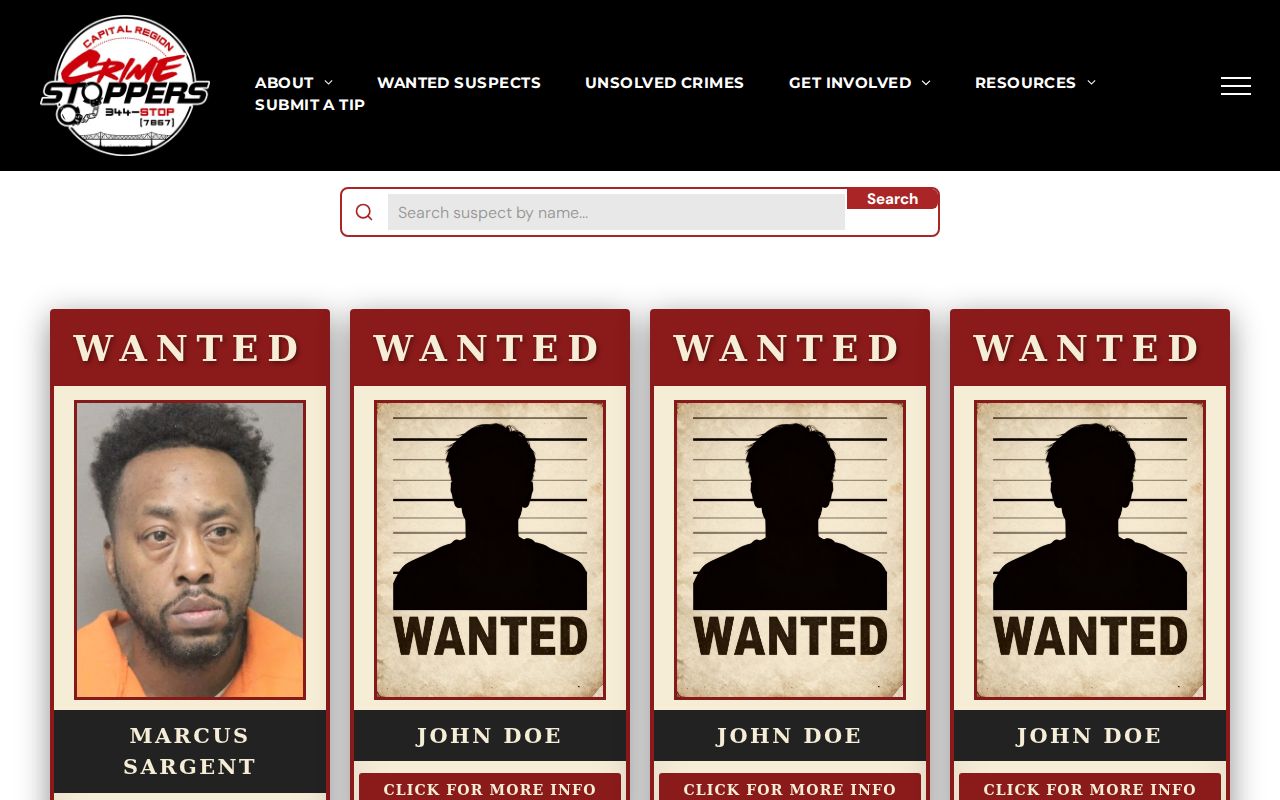
The card layout itself is public information. The people on it are another matter, and their names, photographs, and case narratives are left to the official list rather than republished here. The same caution covers the East Baton Rouge Parish Sheriff's Office inmate roster, which the agency's own notice says is not an official warrant document.
How Most Wanted Differs From an Active Warrant
In East Baton Rouge Parish, a most wanted listing and an active warrant are two different things, not the same.
| Item | Most Wanted Listing | Active Warrant |
|---|---|---|
| Who creates it | An agency's public information decision | A judge or magistrate on probable cause |
| Coverage | A curated subset of cases | One named case file |
| How it ends | An agency removes the entry | The court recalls, serves, or resolves the warrant |
| Where to confirm | The requesting agency | The issuing court and the sheriff's warrant unit |
East Baton Rouge Parish Warrant Sweeps and the Joint Task Force
Enforcement runs on a different track from publicity. A 2025 Metro Council agenda described a $6,030 federal grant for a joint Sheriff's Office and City Constable task force, working felony warrant arrests during monthly sweeps in Baton Rouge. East Baton Rouge Parish readers should read that agenda page for the program's own numbers.
A sweep is not an amnesty and not a list. It is a scheduled push to serve warrants that already exist, which is why an East Baton Rouge Parish resident who learns of a warrant is better off calling a lawyer than waiting for a knock. There is precedent for help outside sweeps, too. The 19th JDC announced a Community Warrant Resolution Clinic for March 27, 2026, with a help desk at City Hall and expungement consultations at the courthouse. That event has passed. Any future clinic has to be verified with the court directly.
When You Believe You Are Listed
Finding your own name means a court case is open. The fastest way to change that runs through the court, not the tip line. Call a defense attorney first in East Baton Rouge Parish, then ask the issuing court to confirm the file number and your next court date.
Important: Do not walk into an agency to argue about a listing, and do not ask a third party to negotiate it. A recall, a bond, or a new date comes from the court that issued the warrant.
Watch for scams while you sort it out. The East Baton Rouge Parish Sheriff's Office warns that it never telephones about jury-duty warrants and never asks for Bitcoin or unusual payment methods.
How Fresh Is an East Baton Rouge Parish Most Wanted List
A most wanted list is only as current as the agency behind it. East Baton Rouge Parish entries can linger after a case closes. A stale posting may sit there for days. A new warrant, meanwhile, might not show up at all. Treat the list as a lead, not an answer: copy the identifying details and confirm the warrant's status with the requesting agency or the issuing court. The active warrant search page explains the lag and how to work around it.